
How to Learn Surfing: A Beginner’s Step-by-Step Guide (With Safety, Gear & Faster Progress)
Surfing looks effortless when you watch experienced surfers glide across a clean wave—but learning it is a journey. The good news? With the right setup, safe conditions, and consistent practice during your surf session, you can progress faster than you think.
This guide breaks down exactly what to focus on as a beginner: where to start, what to ride, how to “pop up,” how to stay safe in the ocean, and the key etiquette that keeps everyone smiling in the lineup.
1) Start in the Right Place (It Matters More Than Talent)
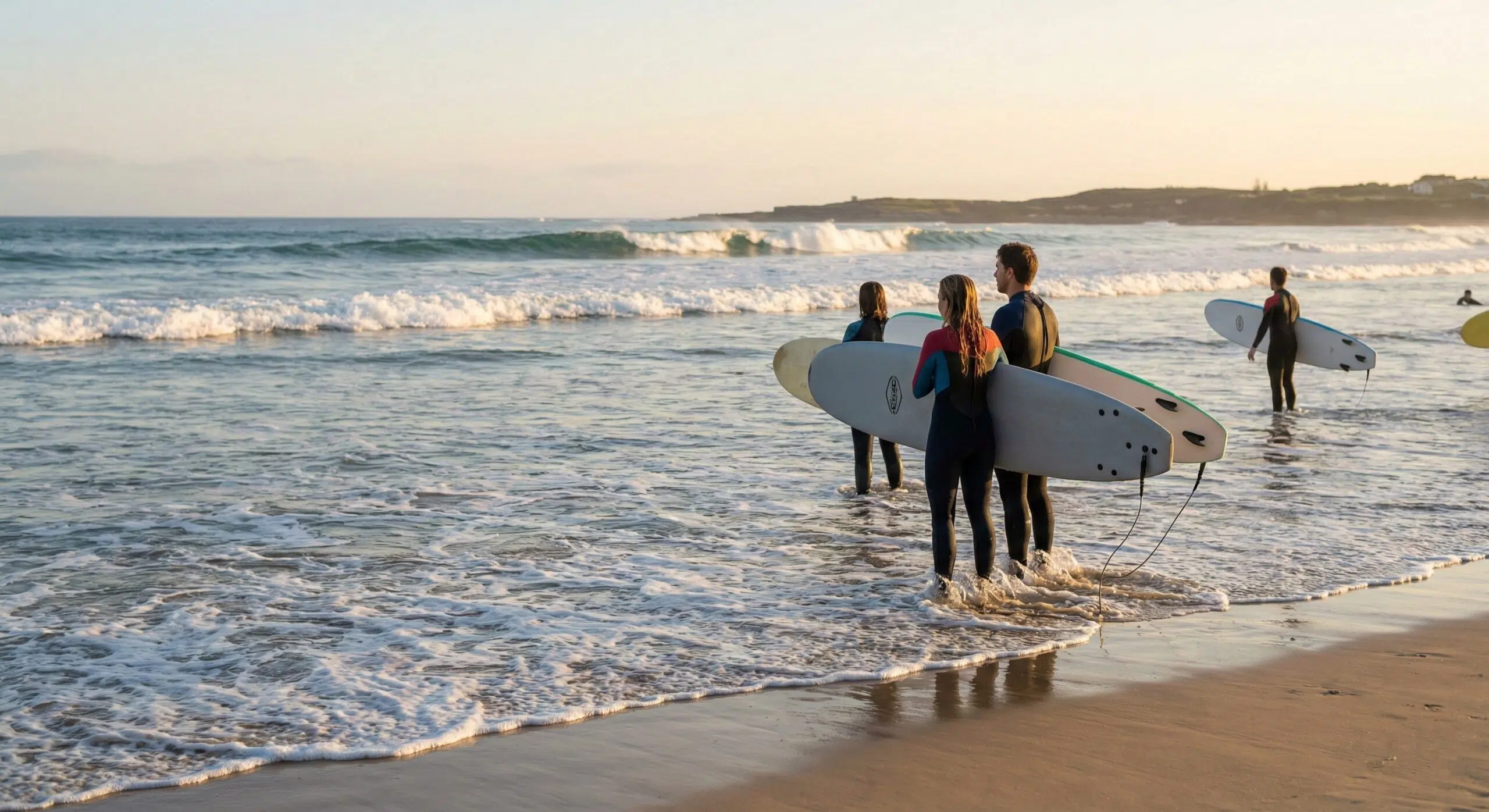
The best learning environment is a A beginner-friendly beach is the best place to learn how to surf. with:
- Small, soft waves are perfect for a beginner surfer to practice on. (knee to chest high)
- Sandy bottom
- Minimal crowd is ideal for a surf school focused on beginner surfers.
- Clear entry/exit points and ideally lifeguards
Avoid powerful reef breaks, heavy point breaks, and busy “expert” lineups early on. You’ll catch more waves (and learn faster) in mellow conditions.
2) Get the Right Gear (Your Board Can Make or Break Your Progress)
Most beginners struggle because they start on a board that’s too small. The easiest way to learn is to maximize stability and wave count.
Beginner setup:
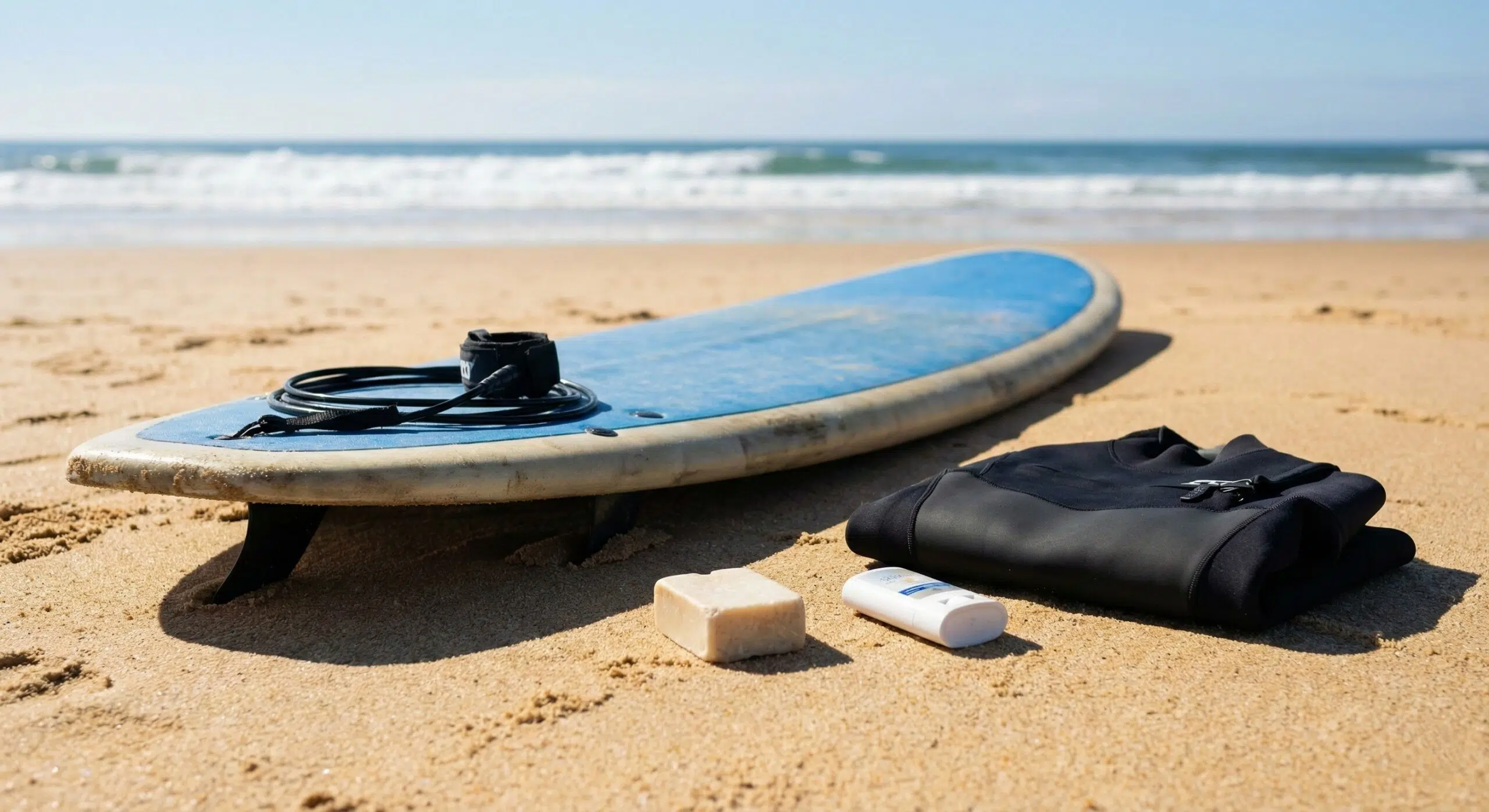
- Soft-top surfboard (foamie): typically 8’–9’ boards are often recommended for a beginner surf experience: typically 8’–9’ boards are often recommended for a beginner surf experience. (more volume = easier paddling + easier pop-up) for those learning to surf.
- A leash is essential for any beginner surfer to keep the board close during a surf session. (correct length for your board) is crucial for a beginner surf setup.
- Wetsuit appropriate for the season
- Surf wax (or soft-top texture, depending on board) for a safer surf camp experience.
- Sunscreen (water-resistant, high SPF)
- Optional but useful: rash guard, ear plugs (if sensitive), wax comb
Think of your first board as a learning platform—not a “cool” performance tool. You want easy waves and lots of repetitions.
3) Learn the Pop-Up on Land First (Your Fastest Win)
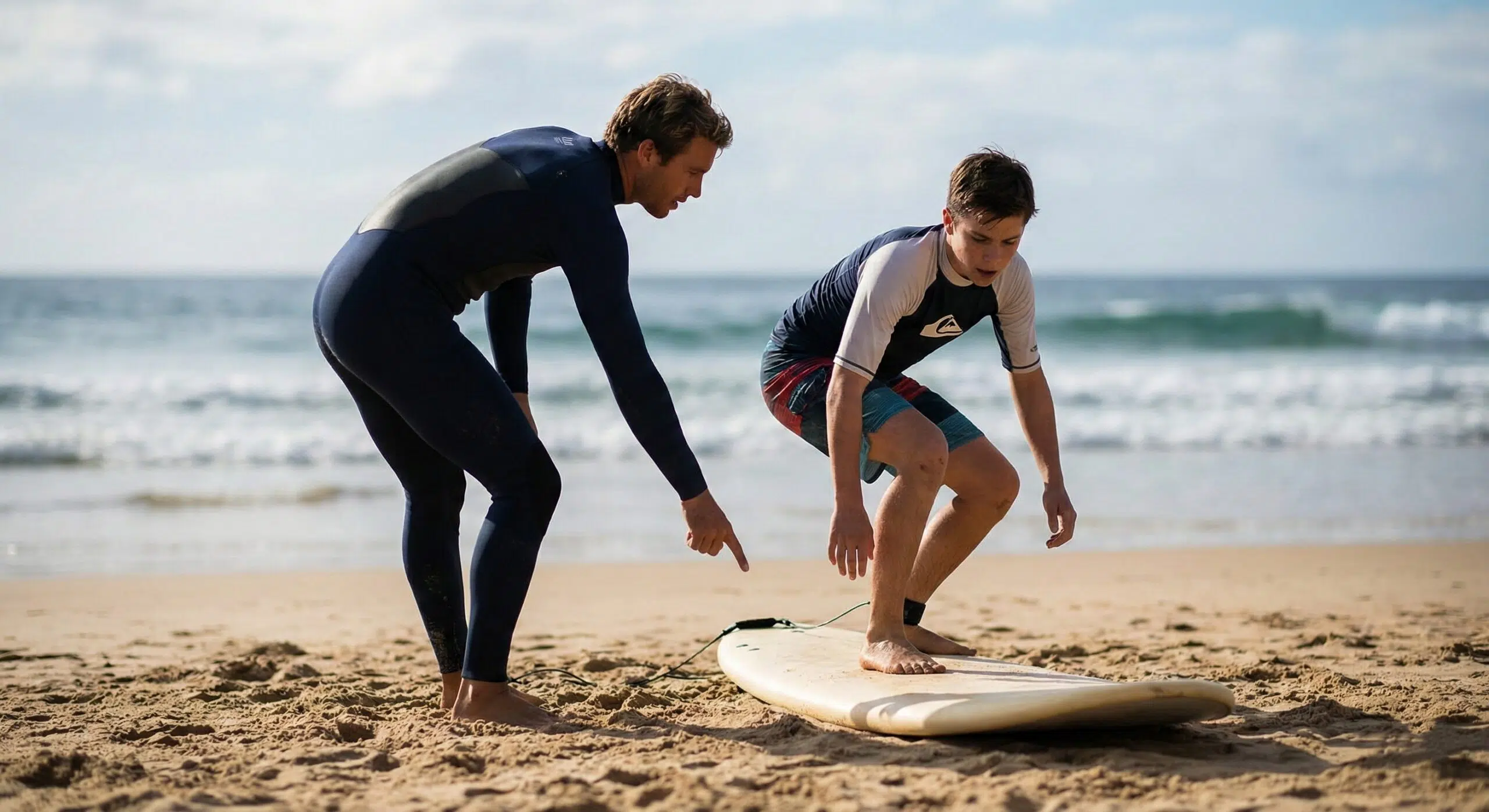
Before you even paddle out, practice the pop-up on land. This builds muscle memory so you’re not improvising in moving water.
Pop-up basics (simple + effective):
- Lie down as if you’re paddling (chest slightly lifted)
- Hands under your ribs (like the bottom of a push-up)
- Push up strongly
- Bring your feet under your body in one smooth motion to improve your ability to learn to surf.
- Land in a stable stance: knees bent, chest up, eyes forward
Tip: Practice 5 minutes per day. Consistency beats intensity.
4) Paddling: The Skill That Unlocks Everything
In your first months, surfing is mostly: ocean awareness + paddling + positioning.
Key paddling tips:
- Stay centered on the board (not too far forward—nose sinks; not too far back—slows you down)
- Keep a relaxed chest lift (don’t banana-bend too hard)
- Long strokes, one arm at a time, steady rhythm
- Look where you’re going (not down)
If you feel tired quickly, add swimming and basic cardio. Better paddling = more waves = faster progress.
5) First Sessions: Start in Whitewater (On Purpose)
Many beginners waste time chasing unbroken “green” waves too early. Start with whitewater close to shore:
- You’ll get more attempts
- You’ll learn timing without the pressure of the lineup
- You’ll build confidence standing up and riding straight
Your first goals:
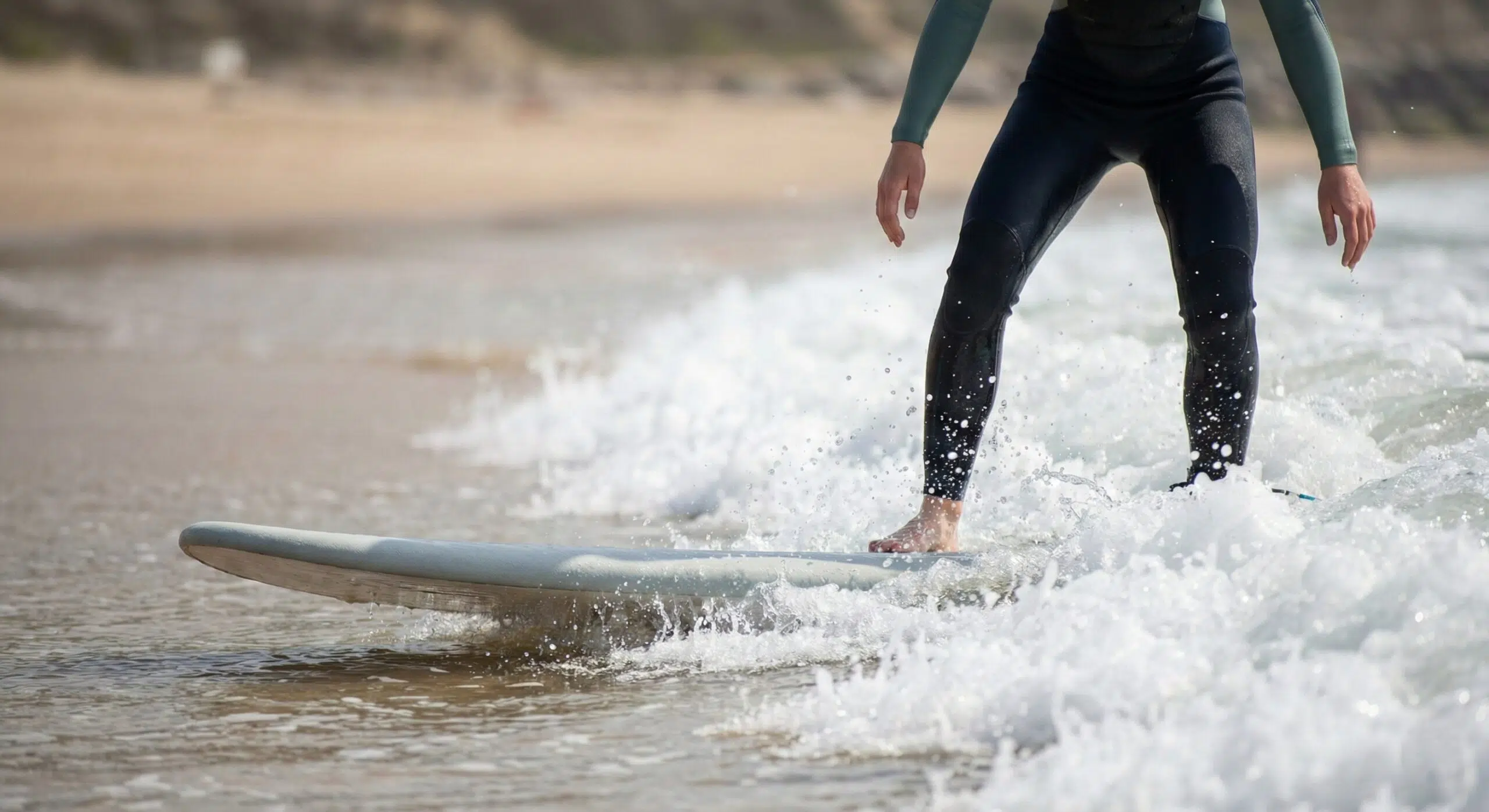
- Stand up consistently in whitewater during your surf lesson.
- Ride with control (balanced stance, knees soft)
- Fall safely during your surf lesson to minimize the risk of injury.
6) Ocean Safety: Rip Currents, Awareness, and Smart Choices
Surfing is not just a sport—it’s ocean navigation.
Minimum safety rules for beginners:
- Never surf alone (bring a buddy)
- Learn to spot rip currents (darker channels, foam moving out, fewer breaking waves)
- Check conditions before entering: swell, wind, tide, currents
- If caught in a rip: stay calm, float, paddle sideways out of it (don’t fight straight in)
- Keep distance from rocks, piers, and crowded zones
Surf with respect for your limits. If in doubt, don’t paddle out.
7) Surf Etiquette: The Rules That Prevent Accidents
Etiquette isn’t optional—it’s safety.
The essentials:
- Don’t drop in (don’t take off on a wave someone else is already riding)
- The surfer closest to the peak usually has priority
- Paddle out of the way (use channels, don’t paddle through the takeoff zone)
- Don’t “back-paddle” or snake people
- Communicate: a simple “You going?” avoids chaos
- If you mess up: apologize and learn—everyone started somewhere during their first surf lesson.
8) How to Progress Faster (Without Getting Frustrated)
The simple formula:
- Surf 2–3 times per week if possible
- Choose easy waves you can repeat during your surf trip (not the “best” waves).
- Stick to the same board until you’re genuinely consistent
- Watch good surfers and copy positioning + timing during your surf session.
- Keep sessions manageable (fatigue causes bad habits)
Progress often comes in sudden jumps—stay patient. The ocean rewards consistency.
Quick Beginner Checklist (Before Every Session)
- Forecast checked (swell/wind/tide)
- Buddy with you
- Right spot for your level
- Soft-top board + leash in good condition
- Warm enough (wetsuit), protected (sunscreen)
- 3 minutes watching the ocean before entering
Want a smoother start?
If you learn with qualified coaching in beginner-friendly conditions, you’ll build confidence faster and avoid the most common mistakes.
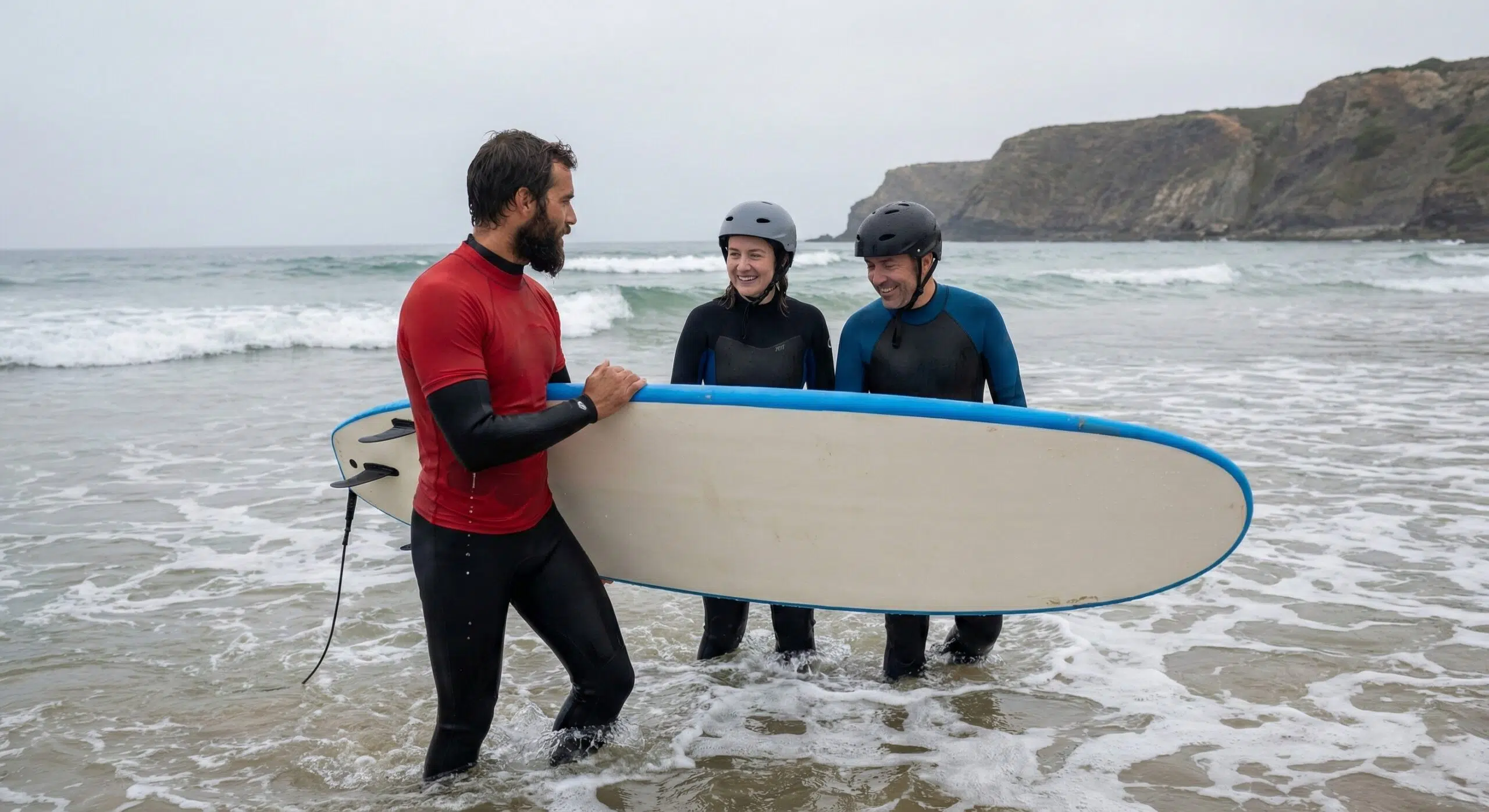
How Can I Learn Surfing?
Definition: “How can I learn surfing” is a common query asking for the steps, resources, and techniques a beginner needs to start catching and riding waves safely and confidently.
Short explanation: Learning to surf involves understanding ocean conditions, developing basic water and board skills, and practicing balance and paddling. Start with lessons from a qualified instructor, use a soft-top foam board in small, forgiving waves, learn surf etiquette and safety (rip currents, positioning), build swimming and fitness ability, and progress gradually by practicing pop-ups, timing, and wave selection. Consistent practice, patience, and respect for the ocean are key to becoming a competent surfer.
Faq Learn to surf and catch a wave: get comfortable in the water
How can a complete newbie start catching waves safely?
Begin as a newbie by choosing the best beginner surf spots with gentle white water and a big board or longboard to provide stability. Spend time in the water paddling around, practice popping up on land and in calm water, and focus on sun protection and wearing an appropriate wetsuit or rash guard in warm water. Start with catching waves lying or kneeling on a big board, then progress to standing once you feel comfortable in the water and have basic balance and momentum going.
Do I need a surf instructor, or can I learn alone?
A surf instructor can speed up your learning process by teaching safety, how to read waves are breaking, how to catch waves consistently, and correct techniques like using your back foot and finding the right fin setup. Self-taught surfers can learn through tutorials and practice, but beginners often get discouraged without feedback; a few lessons from a qualified instructor or surf school or surf camp is one of the best beginner investments.
How long will it take to move from beginner to intermediate?
Progress depends on your time in the water, frequency of practice, and natural ability — many surfers reach a basic intermediate skill level after 6–18 months of regular sessions. To advance, mix practice popping on land, doing push-ups for strength, catching waves consistently, and practicing on both longboards and shortboards as you gain stoke and confidence.
What board should I use when I start—shortboard, longboard, or funboard?
Beginners do best on a longboard or funboard because the larger volume makes it easier to paddle around, catch waves, and get momentum going. Shortboards are for more advanced surfers; once you’re comfortable catching waves, riding a wave, and turning, you can gradually transition to shortboards or performance shortboards with smaller fins.
How do I choose the right surf spots for learning?
Choose surf spots with consistent small waves, sandy bottoms, and plenty of white water where waves are breaking gently. Avoid crowded local surf breaks where advanced surfers ride peel lines. Look for beaches labeled best beginner or surf camp friendly; ask a local surf shop or instructor about tide and wind conditions to maximize your time in the water and avoid getting discouraged.
What drills and exercises help me start catching waves more often?
Practice popping up on the sand and in flat water, work on paddle strength with targeted push-ups and paddling sessions, and drill timing by paddling into white water repeatedly. Paddle around beyond the break to learn positioning, watch where waves are breaking, and practice catching waves in sets to build confidence and timing so you start catching waves with more consistency.
How do I avoid getting discouraged during the learning process?
Set small, measurable goals like catching your first white water wave, standing up three times in a session, or spending more time in the water each week. Celebrate small wins, surf with supportive friends or a surf instructor, and remember that even advanced surfers had long learning curves. Keep sessions fun, protect your skin with sunscreen, and focus on gradual improvement rather than immediate performance.
When is it appropriate to try shortboards and more advanced maneuvers?
Only move to shortboards once you consistently catch and ride waves, have reliable paddling and pop-up skills, and can control speed with your back foot. Start on smaller shortboards or performance funboards in mellow surf to learn turning and generating momentum, and work with an instructor or more experienced surfers to learn fin setups and how to read faster peel waves safely.
How important is ocean knowledge versus physical skill?
Both matter: ocean knowledge—reading tides, currents, where waves are breaking, and local surf etiquette—keeps you safe and helps you find the best surf spots to progress. Physical skills like paddling strength, pop-ups, and balance let you catch waves and ride. Combine tutorials, guidance from a surf instructor, and consistent time in the water to accelerate the learning process.
Any tips for staying motivated on a long surf trip or at a surf camp?
On a surf trip or at a surf camp, plan multiple sessions per day if possible to build repetition, rotate between different types of boards (big board, funboard, longboards) to learn varied skills, and rest when needed to avoid fatigue. Keep sunscreen and sun protection handy, embrace warm water sessions when possible, and focus on fun and community to maintain stoke even when conditions aren’t perfect.