
Intermediate Surf Coaching · Ericeira · Santa Cruz
There is a stage in surfing that almost nobody warns you about. You can paddle out on your own, you catch waves, you stand up without thinking. And then, for two years, three years, sometimes ten, nothing changes. Same waves, same mistakes, same frustration when someone half your age drops in and does something you cannot.
This is the intermediate plateau, and it is the single most common place surfers get stuck. The uncomfortable truth is that it has almost nothing to do with how often you surf.
By Rui Ferreira — Founder of Sea Krew, former competitive bodyboarder and surf coach since 2004.
Short answer: volume without feedback makes bad habits permanent. Breaking the plateau means fixing three specific things — late take-offs, wrong positioning and a missing bottom turn — and learning to read the ocean rather than react to it.
Why more surfing is not more progress
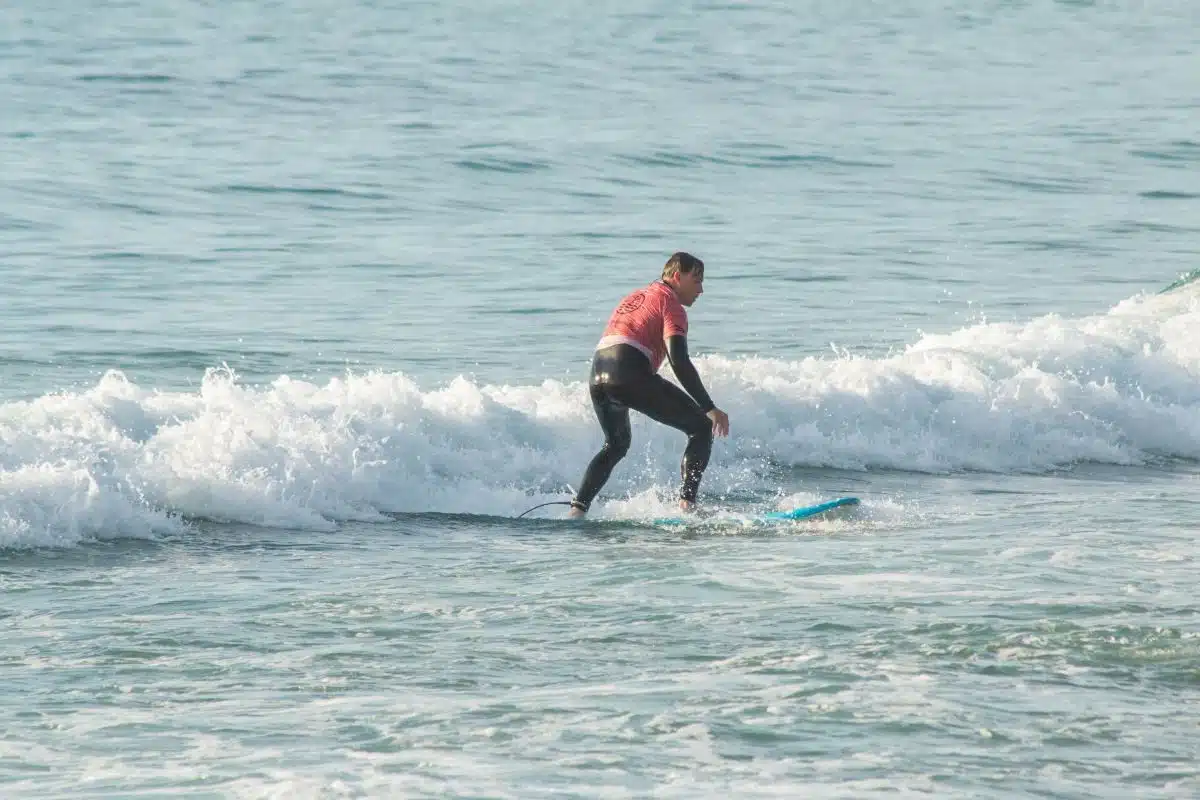
Most intermediates surf the same beach, on the same board, at the same tide, with the same technique. Every session reinforces what they already do, including the errors. Muscle memory does not care whether a movement is correct; it only cares how often you repeat it.
Ten years of that produces a surfer who is very consistent at an intermediate level. Not a better surfer. This is why people who surf twice a week for a decade often get out-surfed by someone who has had six honest coaching sessions.
The most expensive mistake: assuming you already know what you are doing wrong. Almost every intermediate we coach describes a problem that is not their actual problem. What feels like a paddling issue is usually a positioning issue. What feels like a board issue is usually a timing issue.
The three problems behind almost every plateau
1. The late take-off
You feel the wave lift you, you paddle two more strokes, and by the time you are up the wave has already broken. Late take-offs are the reason intermediates spend their sessions in whitewater without understanding why. The fix is rarely “paddle harder” — it is committing earlier, which requires knowing where the wave will break before it breaks.
2. Sitting in the wrong place
Watch a good surfer and you will notice they barely paddle. They are not fitter than you; they are in the right place. Positioning is the highest-leverage skill in surfing and the one almost nobody is taught. It is also invisible from the water, which is why it needs an outside eye.
3. No bottom turn
Most intermediates stand up and go straight to the beach. Without a bottom turn there is no speed, no direction and no possibility of a next manoeuvre. Everything that looks like “real surfing” starts here, and it is the single change that transforms how a wave feels.
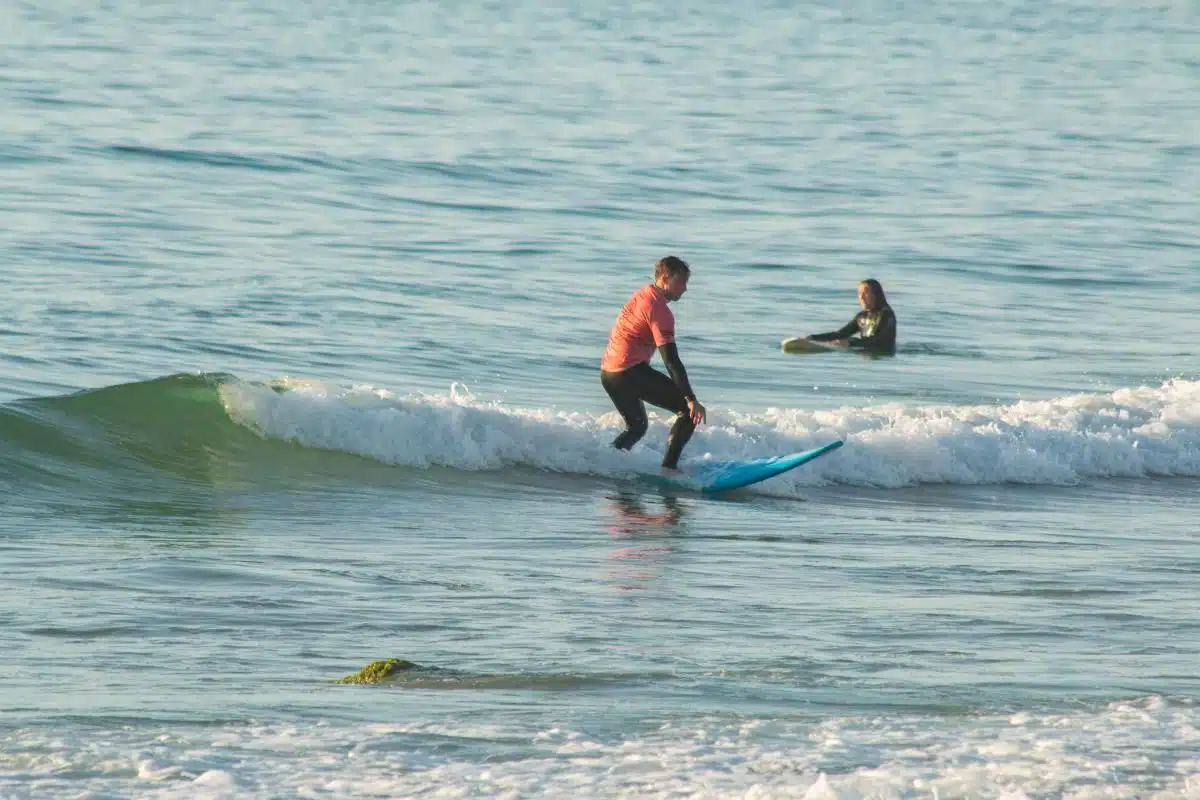
Video analysis: seeing what you actually do
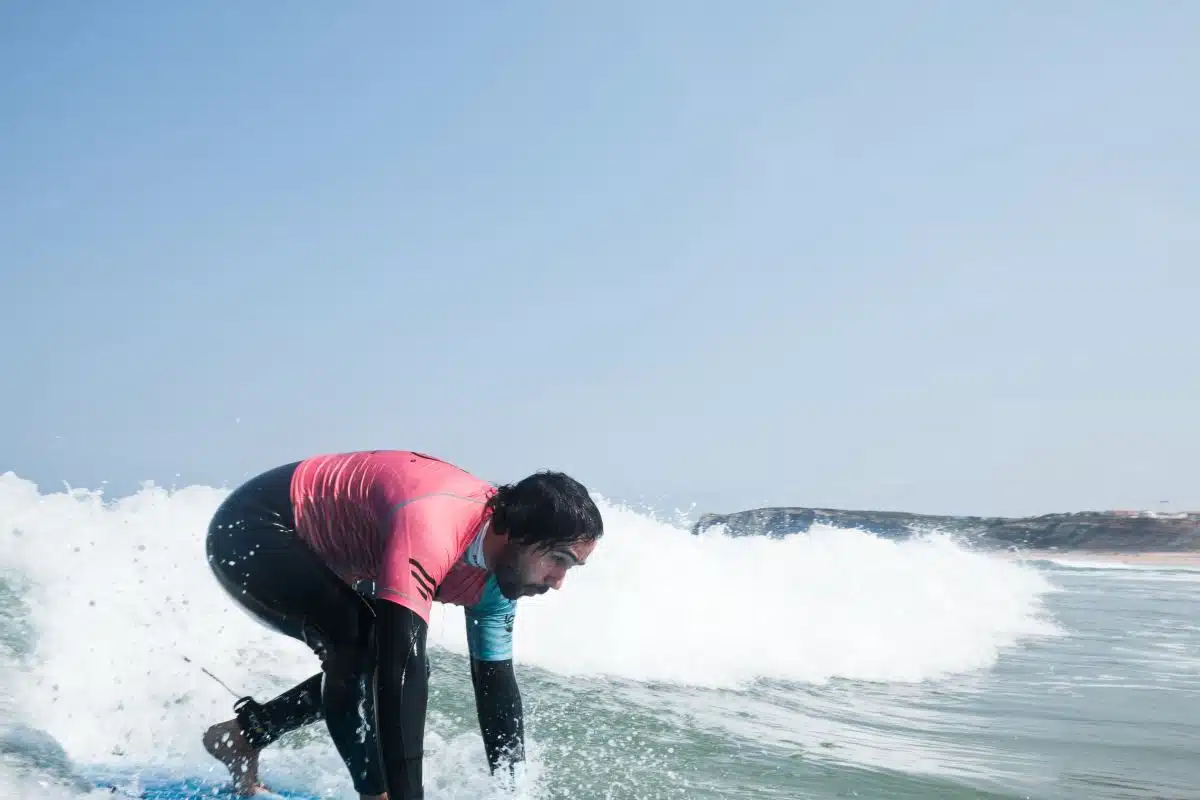
There is a gap between what a surfer thinks they are doing and what the camera shows. People who are convinced they pop up in one motion see themselves push up on a knee. People who swear they are looking down the line watch themselves stare at their own feet.
That gap closes in about four seconds of footage, and it does not reopen. This is why we film sessions and review them the same day: one clip does more than a season of verbal corrections.
What we look for on video: where your eyes go, when your back foot lands, whether your first movement after standing is down the line or towards the beach, and how early you commit. Four small things that decide almost everything.
The skill nobody teaches: reading the ocean
Technique gets you through a wave. Ocean knowledge decides whether you are on a good one in the first place. Where the sandbank sits today, how the tide will change the peak in two hours, which side of the rip to paddle out on, why the third wave of a set is usually the best one on this particular beach.
This is what separates a tourist who surfs from a surfer. It is also, conveniently, the part you can only learn from someone who surfs one coastline every day for decades. Ericeira and Santa Cruz are ideal classrooms because the variety forces you to make real decisions instead of following the crowd.
Try this on your next session: before paddling out, sit on the sand for five minutes and count where the sets break relative to a fixed point on land. Most surfers skip this and then spend an hour in the wrong spot.
What changes in one week of coaching
| Before | After |
|---|---|
| Paddling hard for every wave | Fewer strokes, better position |
| Late take-offs, frequent nosedives | Committing earlier, cleaner entries |
| Straight to the beach | First bottom turn, riding down the line |
| Surfing whatever comes | Choosing waves deliberately |
| Guessing at conditions | Reading tide, wind and banks |
Honest expectation: one week will not make you an advanced surfer. What it does is remove the specific things blocking you and give you a clear list of what to practise. The gains keep compounding for months after you go home, which is the entire point.
Swipe the summary
Frequently asked questions
Why am I not improving at surfing?
Usually because you are repeating the same session without feedback. Volume reinforces whatever you already do, including errors. Most plateaus come down to late take-offs, poor positioning and a missing bottom turn, none of which fix themselves with more surf time.
What is the intermediate surf plateau?
The stage where a surfer can paddle out, catch waves and stand up consistently, but stops improving for years. It is the most common point at which people give up on progressing.
How do I get from whitewater to green waves?
Commit earlier, sit in the right spot and learn to read where the wave will break. Green waves require decisions made before the wave arrives, which is why positioning matters more than paddling strength.
Does video analysis really help surfing?
Yes, more than almost anything else. There is a large gap between what a surfer feels they are doing and what they actually do. One clip usually closes that gap permanently.
How many coaching sessions do I need to break the plateau?
Most intermediates see clear change within three to five focused sessions. A full week gives enough repetition to make the corrections stick after you go home.
Is Ericeira good for intermediate surfers?
Very. Seven distinct breaks within a few kilometres mean you can progress gradually from sheltered beach breaks to reef points, and Santa Cruz nearby offers uncrowded space to practise.
What is a bottom turn and why does it matter?
It is the turn at the base of the wave immediately after standing up. It sets your speed and direction, and without it there is nothing to follow. Every manoeuvre in surfing depends on it.
Stop rehearsing. Start progressing.
Small-group coaching with video analysis in Ericeira and Santa Cruz. Tell us your level and your dates and we will tell you honestly what is holding you back.