
Surf Camp · Day by Day · Ericeira
Surf camp websites are good at photographs and vague about days. You see sunsets and smiling groups, but nobody tells you what actually happens on Tuesday morning. Here is our week, hour by hour where it matters, so you know exactly what you are buying.
By Rui Ferreira — Founder of Sea Krew, surf coach since 2004.
The structure: day one is assessment. Days two to four each target one technical fix. Midweek is usually when it clicks. Days five and six move you from whitewater to unbroken waves. Every day is a different beach, on purpose.
Day one: you arrive as strangers
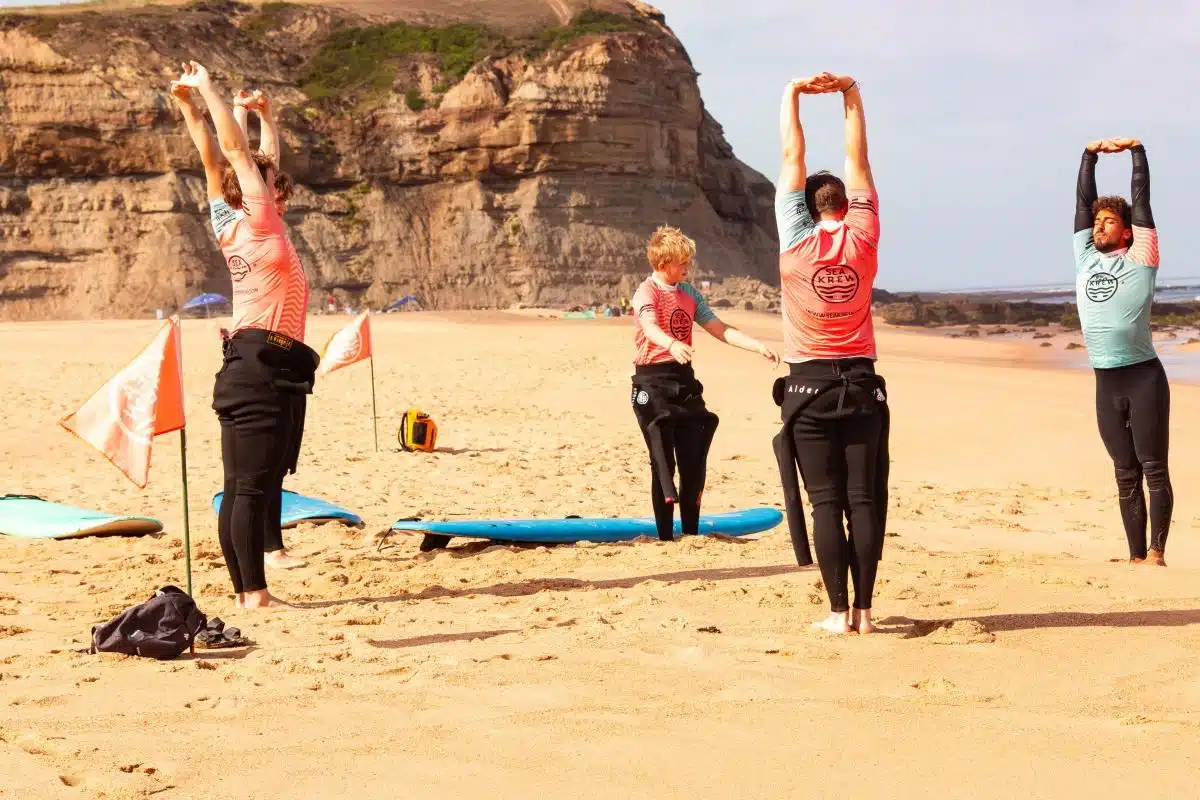
The first session exists to answer one question: where are you actually at? We watch how you paddle, how you get to your feet, where you look, how you read a set. Nobody gets a lecture on day one. We are collecting information so the rest of the week is aimed at you rather than at a generic beginner.
By the evening something else has happened that we cannot plan for: the group has become a group. Six people who have all fallen off a surfboard in front of each other stop being strangers surprisingly fast.
Days two to four: one fix at a time
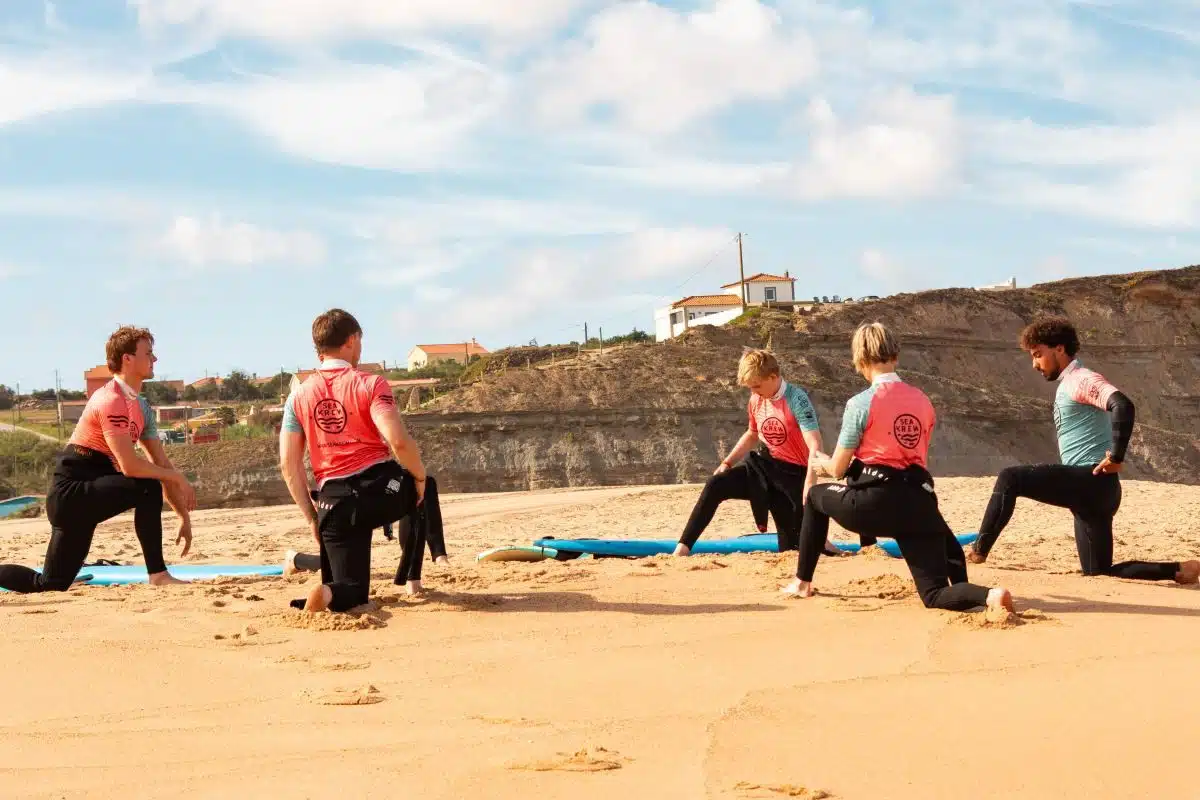
Each day targets a single thing. Take-off timing on Tuesday. Positioning on the peak on Wednesday. First bottom turn on Thursday. That is it. Chasing five improvements at once is how people surf for years without changing anything.
Why it works: we film your waves and review them the same day. Watching yourself paddle late is worth more than being told you paddle late ten times.
Midweek: the day it clicks
Almost everyone has one. Usually day four, usually on a wave nobody expected. Something that was three separate movements becomes one, and the surfer stops thinking. After that session people surf differently for the rest of the week, and they know it.
Manage your expectations: day three is often the worst day of the week. Muscles hurt, the novelty has worn off and progress feels flat. It is completely normal and it is exactly when people who quit surfing quit. Push through it and day four is waiting.
Days five and six: whitewater to green waves
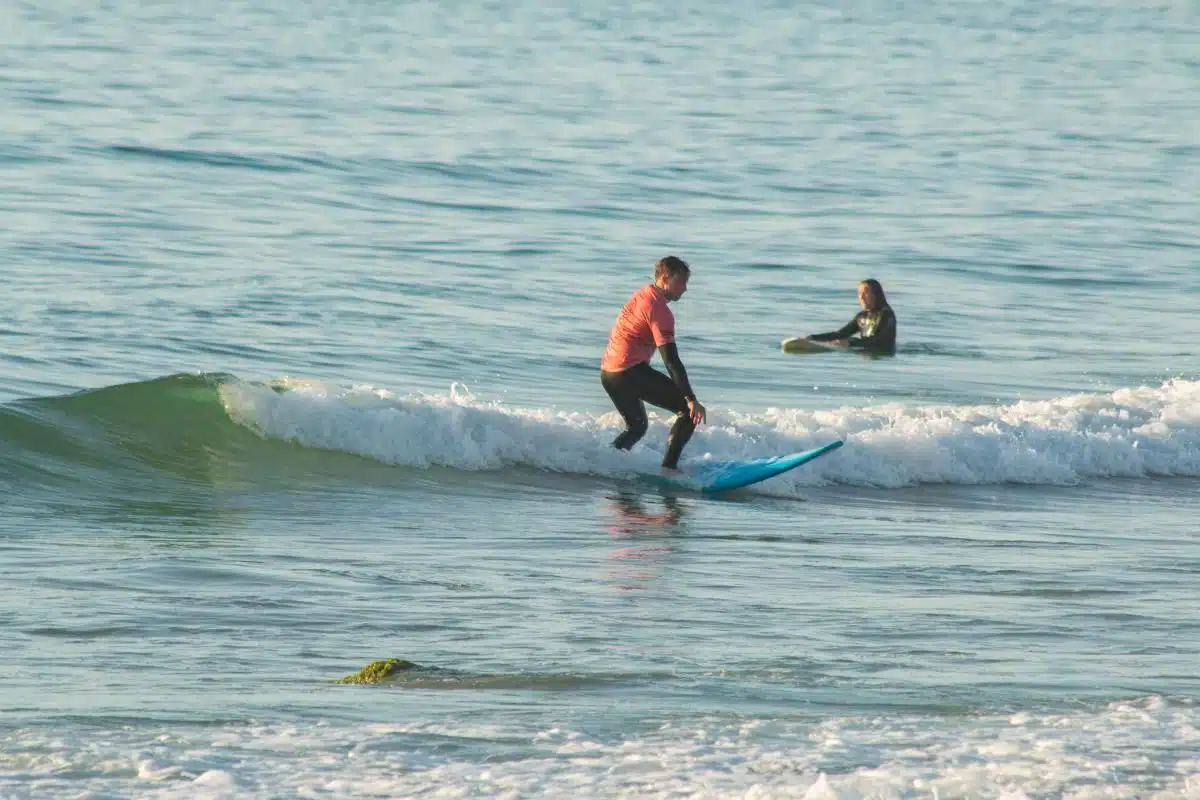
With the basics locked in, we move you outside the broken waves. This is a different sport: you have to read where the wave will break, sit in the right place, commit early and choose a direction. It is also where surfing becomes addictive.
A different beach, every single day
We never run a whole week at one beach. Ericeira and Santa Cruz give us options and we use them: sheltered sand when the swell is up, open beach break when it drops, a reef when you are ready to look at one.
Why it matters: surfing one beach for a week teaches you that beach. Surfing five teaches you the ocean, which is the skill you take home and use for the rest of your surfing life.
The week at a glance
| Day | Focus | What changes |
|---|---|---|
| 1 | Assessment | We learn your level; you meet the crew |
| 2 | Take-off timing | Fewer late waves, fewer nosedives |
| 3 | Positioning | You sit where waves actually break |
| 4 | First turns | Usually the day it clicks |
| 5–6 | Green waves | Unbroken waves, direction, speed |
| 7 | Free surf + review | You surf, we film, you leave with photos |
Day seven: what you take home
The last session is deliberately unstructured. No drills, no single technical goal, just surfing with the coach in the water shooting photos. It exists to show you what the week actually changed, because progress is invisible while it is happening.
You leave with three things: a set of photographs of yourself surfing, a specific list of what to work on next, and the beginnings of the skill nobody can teach you in a classroom, which is reading water. That last one is what keeps improving long after the tan fades.
How to prepare before you arrive
You do not need to train for a surf camp, but two weeks of light preparation makes the first days considerably less brutal.
- Swim a little. Twenty minutes of front crawl twice a week builds exactly the shoulder endurance paddling demands.
- Work your upper back. Paddling is a back exercise more than an arm one. Rows and light pull-ups help more than push-ups.
- Practise the pop-up on the floor. Ten repetitions a day for a fortnight and the movement stops being new when it matters.
- Do not diet the week before. Surfing burns a surprising amount and arriving depleted ruins day three.
The one thing that matters most: sleep. Surfers who sleep well progress noticeably faster during a camp, because pop-up timing is a coordination skill and coordination collapses when you are tired.
What to pack
| Essential | Useful | Leave at home |
|---|---|---|
| Swimwear (two sets) | Reef-safe sunscreen | Your own board, unless advanced |
| Towel, ideally two | Flip-flops and warm layer for after | New surf clothing bought for the trip |
| Refillable water bottle | Zinc for face and lips | Anything that cannot get wet or sandy |
| Any personal medication | Small first aid basics | Excessive luggage, Ericeira is walkable |
Swipe the week
Frequently asked questions
How long should a surf camp be?
Five to seven days is the sweet spot. Three days is enough to stand up and get the basics; a full week is what takes most people from whitewater to unbroken green waves.
Do I need experience to join a surf camp?
No. Camps run for complete beginners through to intermediates, with groups split by level so nobody is held back or thrown in too deep.
How many people are in a group?
Small. Group size is the single biggest factor in how much individual correction you get, so we keep it deliberately low rather than filling sessions.
Are photos included in the surf camp?
Yes. Photos of your sessions are included with surf camps and with 4-lesson packages, shot by a professional surf photographer rather than a phone on the beach.
What happens if the waves are too big?
We change beach. Ericeira and Santa Cruz give us sheltered options, and on the rare day when nothing is suitable for your level we will say so rather than put you in the water.
Is a surf camp only surfing?
Sessions are the core, but there is time to explore the village, eat well and rest. Surfing twice a day every day is how people get injured, not how they improve.
Give yourself one full week
Small groups, all levels, photos included. Tell us your dates and we will tell you which programme fits.