
Quick answer: yes, winter is the best time of year for Portugal’s surf if you already ride green waves. From November to March the Atlantic sends bigger waves, mornings are often offshore and the line-ups empty out. The water drops to around 14–16°C at its coldest in February, so you’ll want a 4/3 wetsuit with boots. Winter is not the time to learn from zero: it rewards intermediate and advanced surfers who have someone choosing the right spot and the right hour.
By Rui Ferreira, head coach at Sea Krew, certified surf coach since 2004, former pro bodyboarder and spotter for the Nexus tow-surf team in Nazaré.
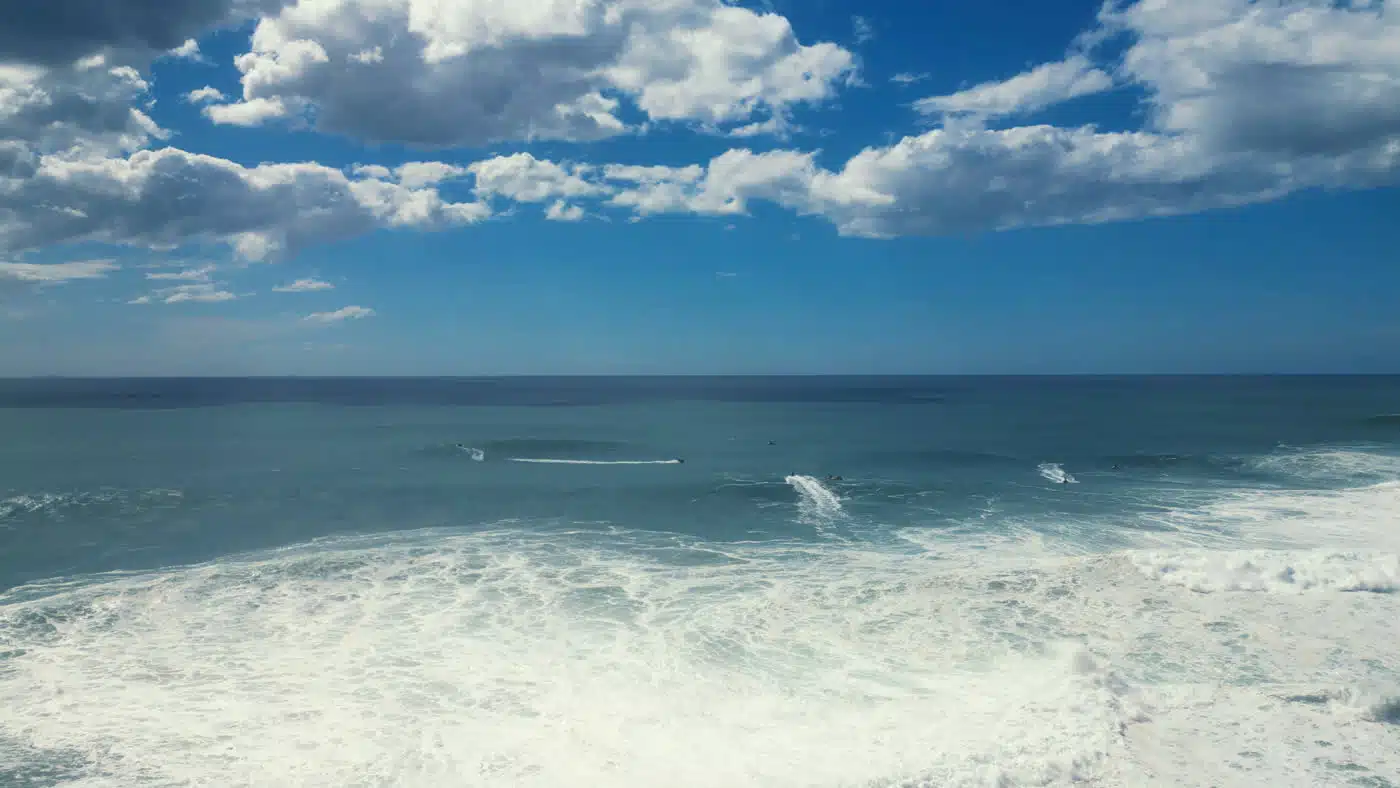
Why winter is the time to surf in Portugal
Most people picture the Portuguese surf scene as a summer thing: warm sand, busy beaches, small fun waves. Locals know the real season starts when the tourists leave. Here is what changes in the winter season compared with the summer months.
Bigger, more consistent waves
Low-pressure systems in the North Atlantic generate long-period swell that travels thousands of kilometres before it hits the Portuguese coast. In winter that energy arrives more often and with more power, so you get consistent surf and quality waves. Reefs and points that sit flat for most of the summer finally wake up, which is why Ericeira, Peniche and Nazaré are on every serious surfer’s winter list.
Offshore mornings
“Offshore” means the wind blows from the land towards the sea, holding the wave face up and keeping it clean. In winter, the Lisbon coast often gets light easterly winds in the morning, so the first sessions of the day are usually the best. That’s why our winter sessions often start early.
Uncrowded waves
Summer brings surf schools and holiday crowds to every beach. In winter the town goes quiet. You share the peak with a handful of locals instead of fifty people, which means more waves per session and more time to actually practise.
Is winter surfing in Portugal right for your level as a surfer?
This is the question we answer most often. Portugal has waves for every level of surfer, but in winter the honest answer depends on where you are.
Beginner surfers: wait for spring to autumn
Waves in Portugal are powerful in winter. Even the “small” days carry more energy than a summer wave, the water is cold and the rip currents are stronger. Our winter programmes are built for surfers who are already catching unbroken waves. If you’re a beginner, plan your first surf trip between spring and autumn, when the beaches offer smaller, mellow waves. You’ll progress faster and enjoy it more.
Intermediate surfers: your best season to progress
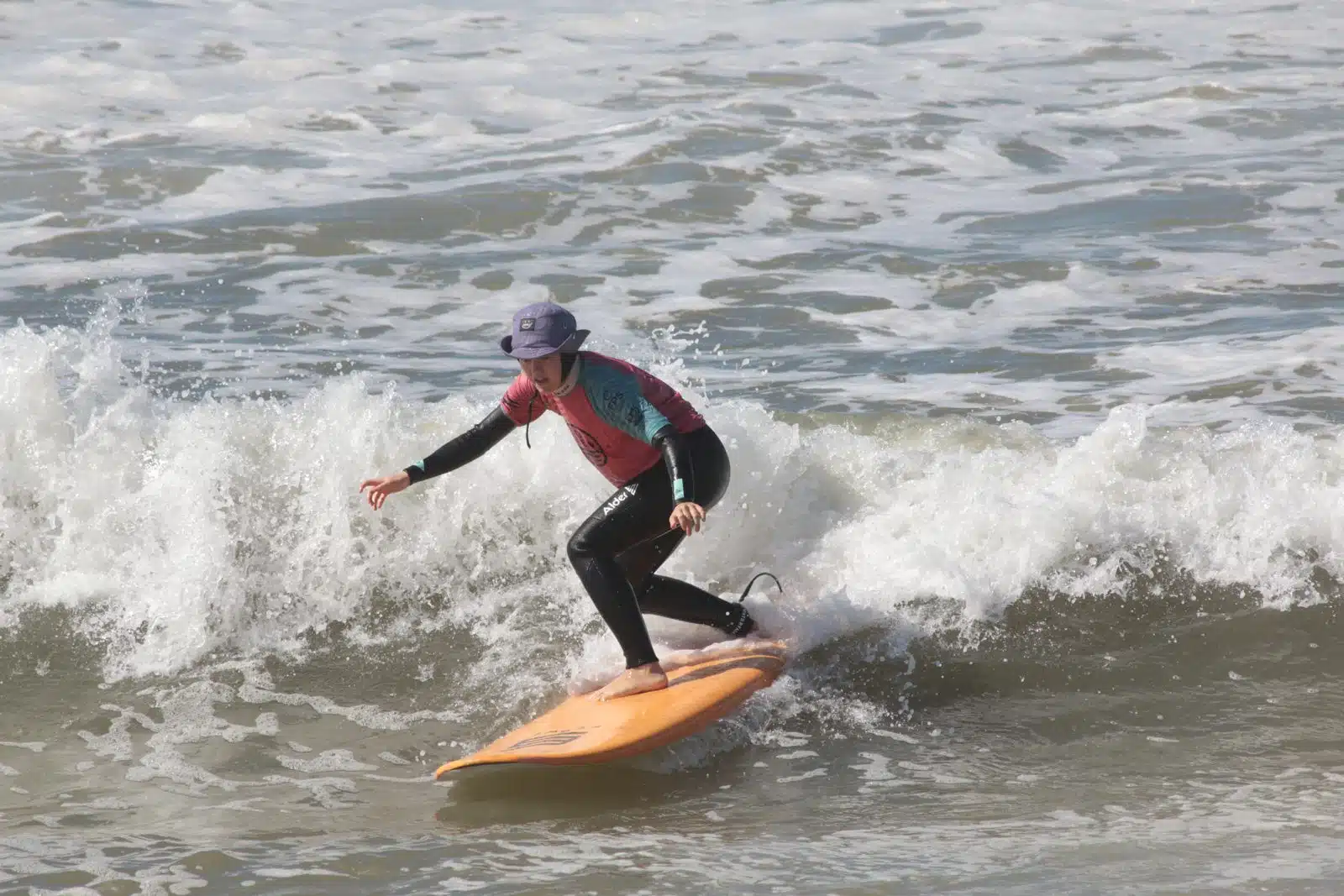
If you can paddle into green waves and ride down the line, winter is when you improve fastest. More consistent waves mean more repetitions of bottom turns, reading the peak and timing your take-off. Most people who feel “stuck” are missing two things: good waves and someone telling them what to change. Winter gives you the first; good surf coaching in Ericeira gives you the second. If that sounds familiar, read why you’re stuck as an intermediate surfer.
Advanced surfers: reefs, points and guiding
Advanced surfers come for the reefs and surf breaks that only work in winter. The challenge is choosing: on a big day half the coast is closed out and the other half is too windy. Local knowledge saves you hours of driving and lets you surf the right wave of the day rather than the most famous one.
Sea and weather conditions change daily. We choose spot and time based on safety and conditions. We never promise waves, only the process, the care and the guidance.
Water temperature and wetsuits: your winter surf trip kit
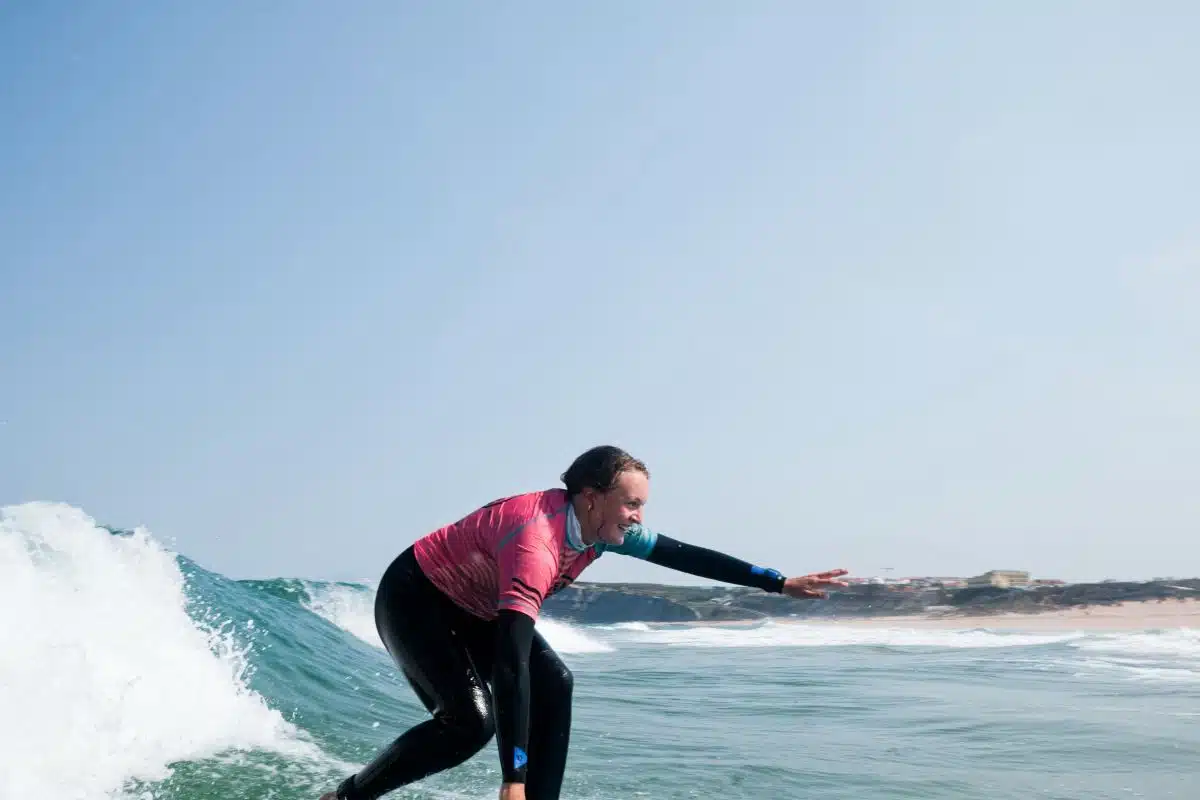
The Atlantic in central Portugal is colder than most people expect, but very surfable with the right gear. Water temperature drops gradually through the autumn and reaches its lowest point in mid to late February.
| Period | Approx. water temperature | Recommended wetsuit |
|---|---|---|
| October | around 18–19°C | 3/2 or 4/3 |
| November–January | around 15–17°C | 4/3 + boots |
| February–March (coldest) | around 14–16°C | 4/3 + 3 mm boots, or 5/3 for long sessions |
Figures are approximate seasonal averages for Ericeira (source: surf-forecast.com). On cold, windy days a hood helps a lot. In all Sea Krew sessions a 4/3 winter wetsuit and boots are included, so you don’t need to fly with heavy gear.
Best surf spots in central Portugal in winter: Ericeira, Santa Cruz and Lisbon
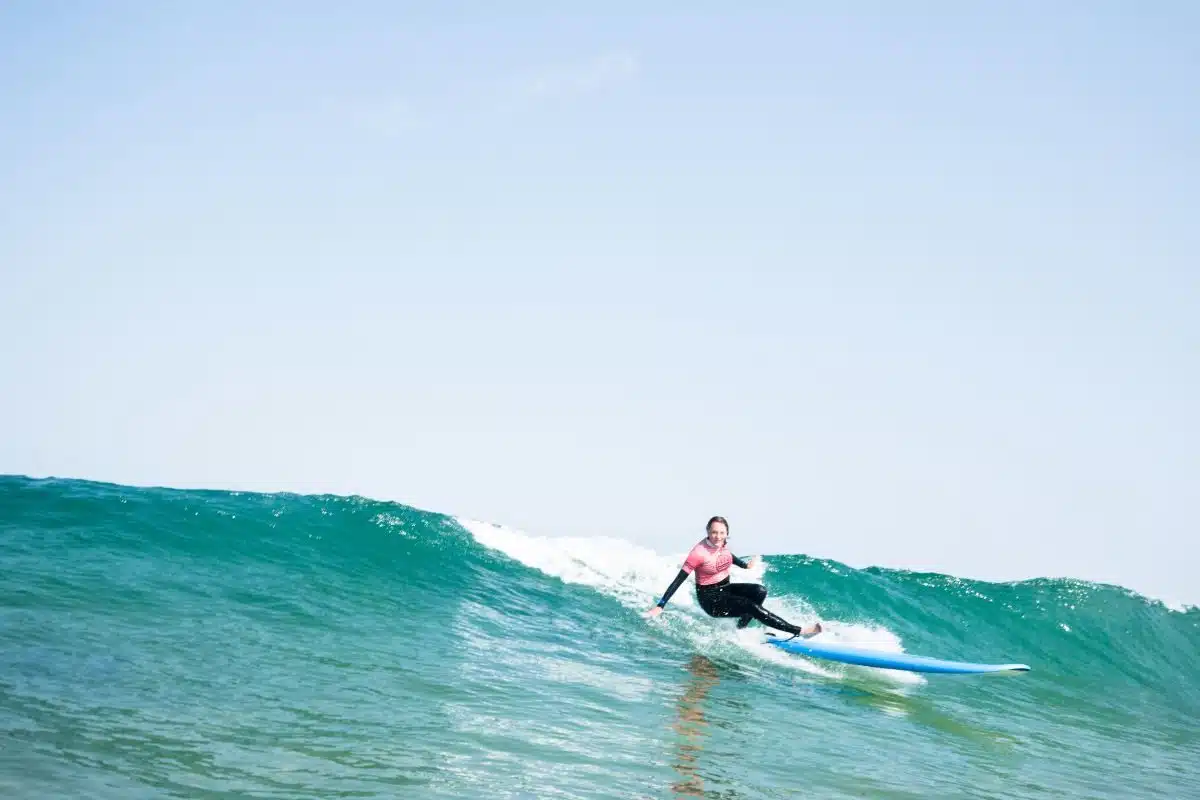
Rather than a ranking of the best spots in Portugal, here is how we think about each area in winter. Every place to surf, and every surf spot, has its own personality, and the right one changes with the swell, the wind and the tide.
Ericeira: the surf town inside Europe’s only World Surf Reserve
Ericeira is a little surf town less than an hour from Lisbon, and a World Surfing Reserve since 2011. Many call it Portugal’s surf capital: there’s a surf shop on every corner, surf house accommodation a short walk from the waves, and a proximity to surf breaks that few places match. Ribeira d’Ilhas, a right-hand point, is one of the best right-handers in the country on a solid winter swell. Its coastline is full of reefs and points that need winter energy to work, which makes it one of the most famous European surf destinations from November to March. It’s also where you need to be most selective: some of these waves are for experienced surfers only. Read more in our complete guide to surfing in Ericeira.
Santa Cruz: quiet beach breaks near Lisbon
A little further north, Santa Cruz (Torres Vedras) offers long stretches of sand and some of the best surf beaches near Lisbon. On days when the waves are too big or too messy for the reefs, a sandbank in Santa Cruz can be the pick of the day, often with far fewer people in the water.
Peniche and surfing in the Algarve
Peniche has the advantage of facing different directions, so there is often a sheltered beach somewhere. We compare both towns in Ericeira or Peniche. Further south, surfing in the Algarve is another option: its south coast is more protected and suits travellers looking for smaller waves, although it’s a long way from Lisbon.
Portugal surf guide: top surf breaks and the best surf destinations in Portugal
Portugal is one of the best surf destinations in Europe because its coast faces the open Atlantic and has many spots within a short drive. That variety of waves means plenty of surf in winter, from mellow sandbanks to the bigger waves that only big wave surfers ride. The main surf hubs are Ericeira, Peniche and Nazaré on the central coast, the Algarve in the south and the area around Porto in the north. All are famous surf destinations in Portugal, and each major surf town behaves very differently in winter.
Think of this as a surf travel guide for the cold months, not a list of the best surf spots: the top surf breaks on any given day depend on the forecast. Portugal has waves all year and spots for beginners in every season, but the amazing surf of winter belongs to people already surfing waves beyond the whitewater. Local surf knowledge is what turns a surf vacation into an epic surf escape instead of a week spent driving around.
How we pick the surf spot every winter morning
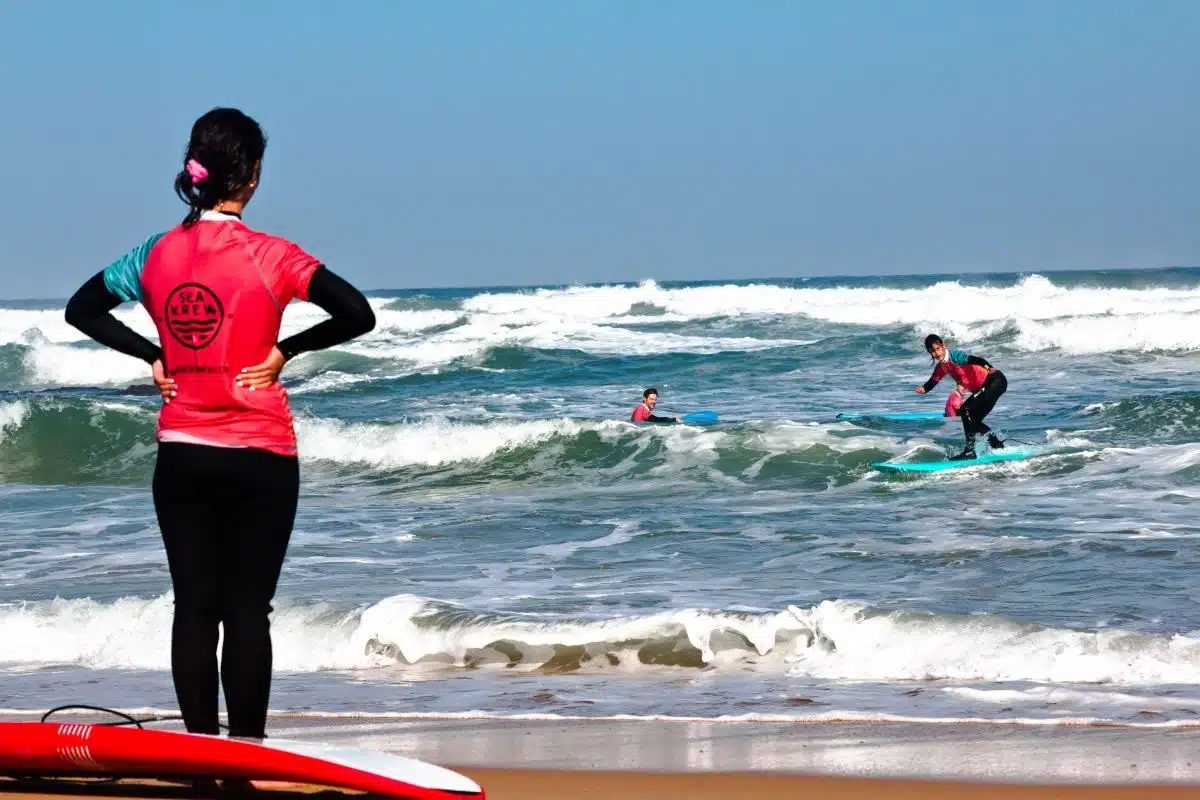
This is the part no forecast app does for you. Every morning before a session we go through the same process:
- Swell: size, period and direction. A long-period northwest pulse lights up some spots and closes out others.
- Wind: where it blows from now and how it will change in the next hours. We chase the offshore window.
- Tide: many reefs and beach breaks only work at a certain stage of the tide.
- The group: the right wave for someone working on bottom turns is not the right wave for an advanced surfer working on the hollow section.
- Plan B: we always know where we go if the first option isn’t safe or isn’t working.
After that, we check the surf spot with our own eyes before anyone paddles out. More than twenty years of coaching on this coast, and years of spotting big-wave surfers in Nazaré, taught me one thing: the ocean decides, and our job is to read it well. In multi-session coaching programmes, video analysis helps you see exactly what to change (for intermediate and advanced levels, from four sessions or with the Local and Captain Surf Club membership tiers).
Sea and weather conditions change daily. Spot and timing always depend on safety.
Beyond your surf trip: epic surf in Nazaré’s big-wave season
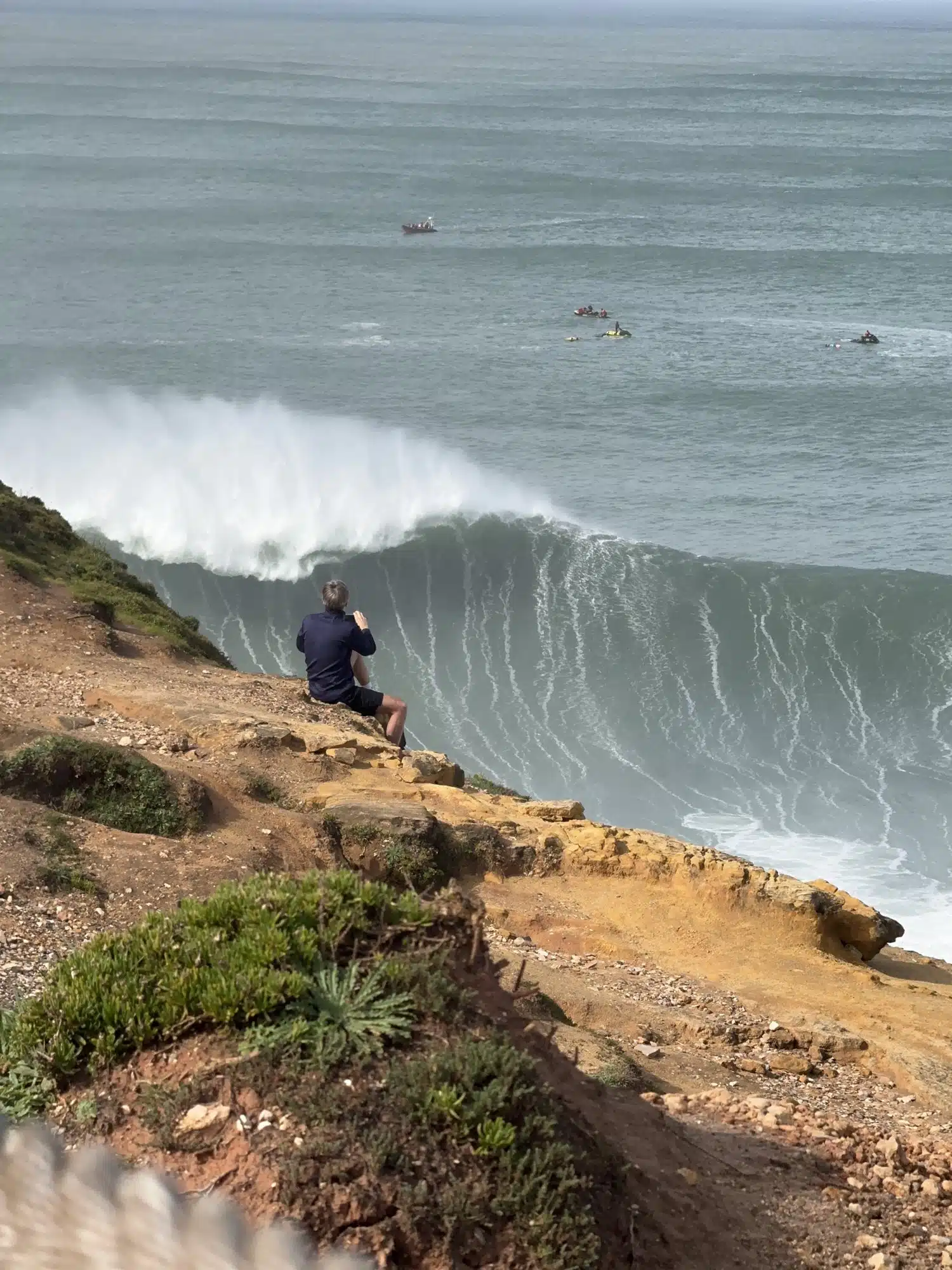
Winter is also when Nazaré shows why it holds the world records for the biggest waves ever surfed. The underwater canyon off Praia do Norte focuses Atlantic energy into XXL waves that attract the best big wave surfers on the planet. Watching a big day from the lighthouse is unforgettable, and seeing it from the water with experienced jet ski pilots is another level. As a spotter for the Nexus team, I’ll show you how those XXL days actually work. See our Nazaré big wave tour and the story behind it in Nazaré through a spotter’s eyes. Tours depend on ocean and safety conditions.
Surf travel checklist for the cold months
- 4/3 wetsuit and boots (included in our sessions), a hood if you feel the cold
- Changing poncho and a warm jacket for after the session
- Sunscreen: the winter sun is lower but the UV still burns on long sessions
- A board with a bit more volume: thicker wetsuits make paddling harder
- Travel insurance that covers surfing
- Flexible plans: the best day of the week might not be the one you planned
Think of this as your mini surf guide for the trip. For the full list, see our surf camp packing list. And if you’re still deciding between seasons, our best time to surf in Portugal guide covers the whole year month by month.
Prefer to swipe? Watch the winter guide as a story
FAQ: surfing Portugal in winter
Is Portugal good for surfing in winter?
Yes. Winter brings the most consistent waves of the year and far fewer people in the water. It’s the best surf season if you already ride unbroken waves.
How cold is the water in Portugal in winter?
Around Ericeira it typically drops to about 14–16°C at its coldest in February. Air temperatures are mild by European standards.
What wetsuit do I need in Portugal in December or January?
A 4/3 wetsuit with boots works for most people. If you feel the cold or plan long sessions, a 5/3 and a hood are worth it.
Can beginners surf in Portugal in winter?
It’s possible on small days at sheltered beaches, but winter conditions are more demanding. We recommend beginners come between spring and autumn; our winter programmes are for intermediate and advanced levels.
Ericeira or Peniche: which spots in Portugal are better in winter?
Both work. Ericeira shines on clean days on its reefs and points; Peniche has more sheltered options when it gets very big. Santa Cruz is a great middle ground with empty waves on many days.
When is the big-wave season in Nazaré?
The biggest days happen during the winter months, when strong North Atlantic storms line up with the Nazaré canyon. Exact days depend on each forecast.
Plan your surf holiday in Portugal this winter
The ocean changes every day, so we adapt the plan to your level and the conditions. Tell us your dates and your experience, and we’ll suggest the right winter programme for you.