
Learn To Surf · Ericeira · Portugal
Nobody arrives at their first surf lesson relaxed. There is a specific mix of excitement and quiet dread that everyone feels standing on the sand in a wetsuit that does not feel like clothing, holding a board that is bigger than expected, watching water that suddenly looks less friendly than it did from the café.
That is normal. What follows is a straight answer to what learning to surf in Ericeira actually involves, so you arrive knowing what happens rather than hoping for the best.
By Rui Ferreira — Founder of Sea Krew, surf coach since 2004.
The essentials: no experience needed, board and wetsuit included, small groups, and a beach chosen on the morning to match your level. Most people stand up on day one. Bring swimwear, a towel and water.
Safety first, and not as a formality
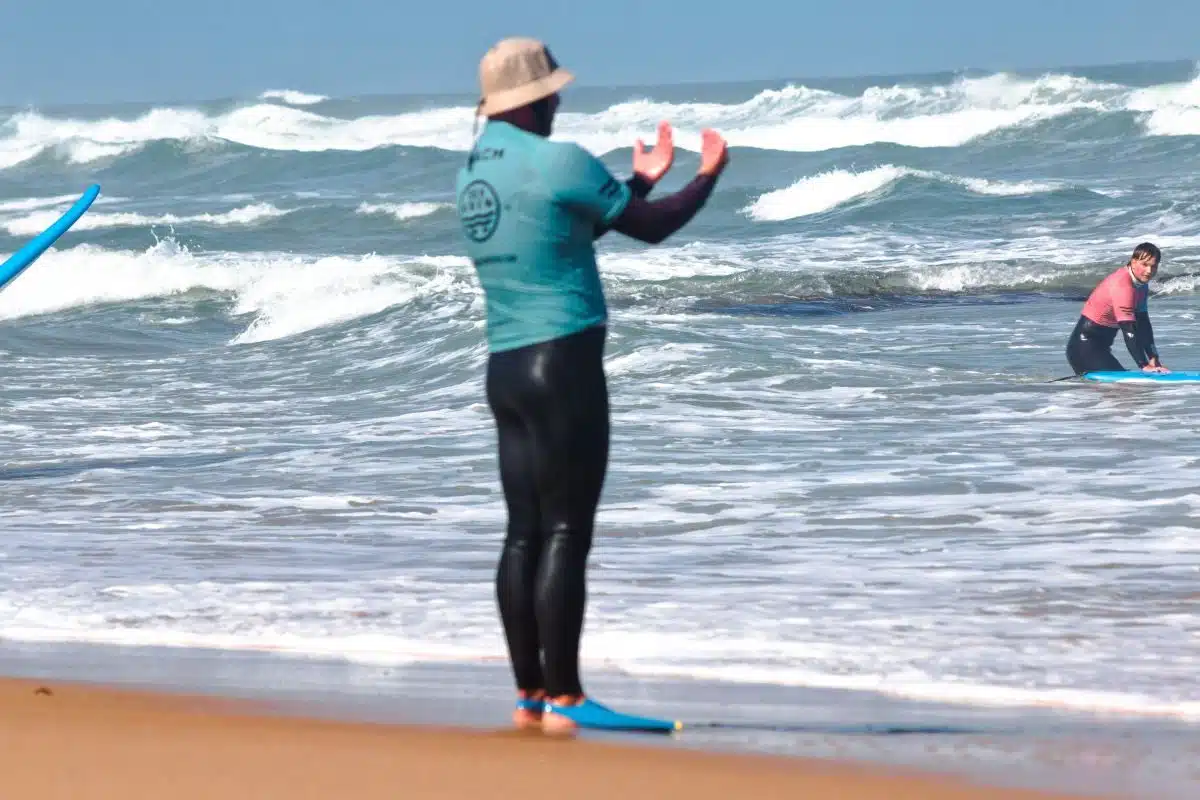
Every lesson starts on land. We cover how waves break and why they break where they do, where to enter and exit the water at that particular beach, how to fall away from your board rather than onto it, and how to recognise and get out of a rip current.
Rip currents are the part almost nobody has had explained properly. They are not something to be afraid of once you understand them, and understanding them takes three minutes on dry sand. A rip is simply water that came in with the waves finding its way back out. Swim across it, not against it, and it stops being dangerous.
Never do this: do not put your board between you and an incoming wave, and never dive head first into shallow water. Almost every beginner injury in surfing comes from one of these two things, and both are entirely avoidable.
The pop-up, rehearsed before you get wet
Next comes the movement itself, practised on the board on the sand until it stops being a sequence you think about. Hands flat under the chest, one clean push, feet landing shoulder width apart, knees bent, eyes up the beach. Not up at the sky, not down at your feet — up the beach, where you are going.
Doing this three or four times on land saves you a dozen wasted waves in the water. It feels slightly silly on the sand and it is the difference between standing on day one and spending the session on your stomach.
The one thing that fixes most beginners: look where you want to go. The board follows your eyes. Surfers who stare at the nose of the board fall off the nose of the board, every single time.
Ninety minutes in the water
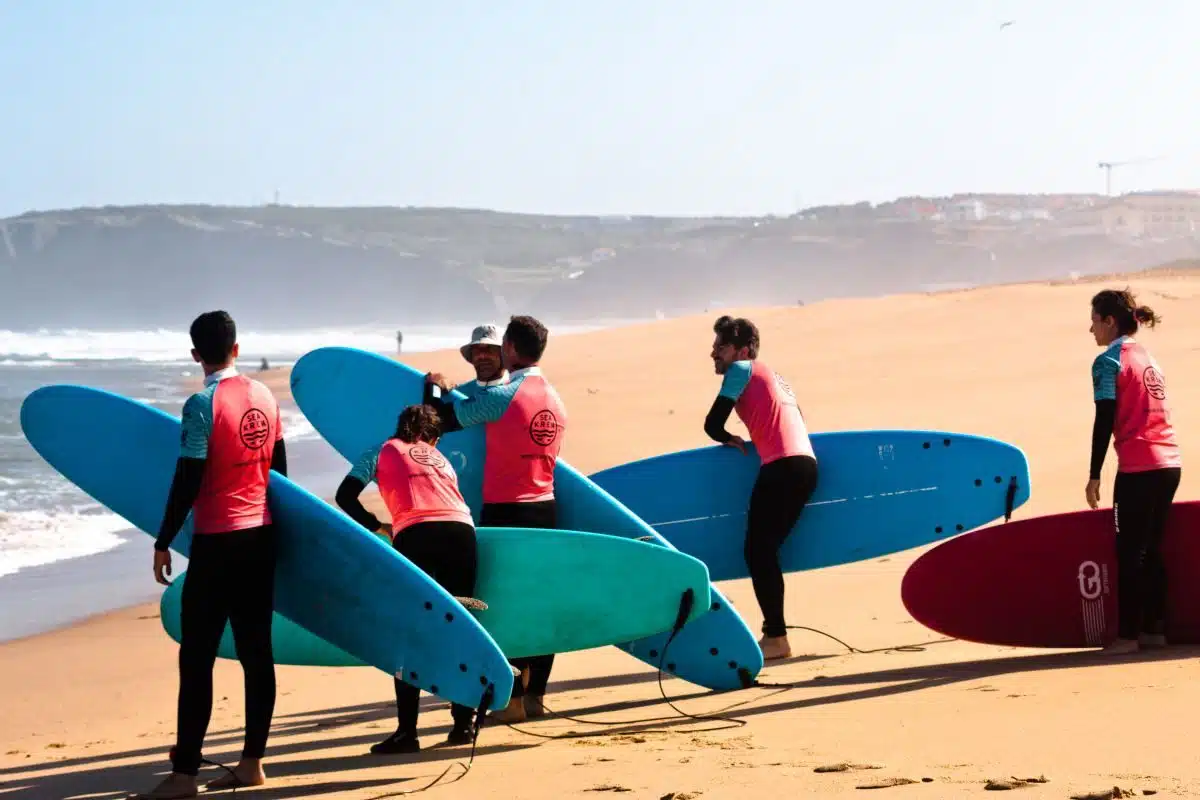
Beginners surf whitewater, the broken part of the wave that has already done its work. The board is a soft-top: wide, buoyant, forgiving, and safe if it hits you. Your coach stands beside you in waist-deep water, turns the board, times the push and tells you exactly when to stand.
This is where group size stops being a marketing line and becomes arithmetic. With twelve people to one instructor you get pushed into a wave and then queue. With a small group you get corrected on the wave you just rode, while it is still fresh, before the next one arrives. That loop is the entire mechanism by which people learn.
Will you stand up on the first day?
Most people do. We do not promise it, because the ocean does not take instructions and some days are harder than others. But with the right board, a beach chosen for your level and someone pushing at the right second, standing during the first session is the norm rather than the exception.
What matters more is what comes after. Standing once is a good push plus luck. Standing repeatedly, then choosing your own wave, then paddling into it without help — that is real surfing, and it usually takes three to five sessions.
Expect to be tired: paddling uses muscles most people never train. Ninety minutes will feel like a full day at the gym, and the day after your first lesson your shoulders and ribs will remind you. It passes quickly and it is a sign you actually surfed.
Which beach, and why it changes daily
We choose the beach on the morning of the lesson, never weeks in advance. Ericeira has sheltered sandy options like Foz do Lizandro and Praia do Sul, and Santa Cruz is twenty minutes north with long, uncrowded beach breaks.
Swell size, tide and wind decide which one is right for you that day. A school tied to a single beach has to run the lesson there no matter what the ocean is doing. That is the difference between a lesson that works and a lesson that happens.
Book the morning: the nortada wind usually arrives after midday and turns clean waves into chop. Morning sessions are calmer, cleaner and considerably easier to learn in.
What is included and what to bring
| Included | Bring |
|---|---|
| Soft-top board sized for you | Swimwear, worn under the wetsuit |
| Wetsuit for the season | Towel |
| Qualified coach, small group | Reef-safe sunscreen |
| Beach chosen that morning | Water and a snack for after |
| Photos with camps and 4-lesson packages | No experience necessary |
Swipe the beginner guide
Frequently asked questions
Do I need to know how to swim to learn surfing?
You should be comfortable in water at waist to chest depth. Beginner lessons take place in shallow whitewater with a buoyant board attached to your ankle and a coach beside you, so you do not need to be a strong swimmer.
What age can you start surfing?
Children from around six or seven can start on small days, and there is no upper limit. We regularly teach people in their fifties and sixties who stand up in their first session.
How fit do I need to be to surf?
Reasonable general fitness is enough for a first lesson. Paddling is the tiring part and it improves quickly. You do not need to train beforehand.
Is it better to learn to surf in a group or privately?
Small groups work well for most beginners: you rest between waves, you learn from watching others and it costs less. Private lessons make sense if you are nervous in water or want to progress very fast.
What should I wear under a wetsuit?
Swimwear only. Nothing with zips, buckles or thick seams, which become uncomfortable quickly under neoprene.
How many lessons until I can surf on my own?
Standing up often happens in the first session. Catching unbroken green waves independently usually takes three to five sessions, depending on conditions and water confidence.
Is Ericeira good for complete beginners?
Yes. It has sandy, sheltered beaches for learning as well as serious reef breaks for later, and Santa Cruz nearby offers uncrowded space when Ericeira is busy.
Your first wave is closer than you think
Small beginner groups in Ericeira and Santa Cruz, board and wetsuit included. Tell us your dates and we will put you in the right group.